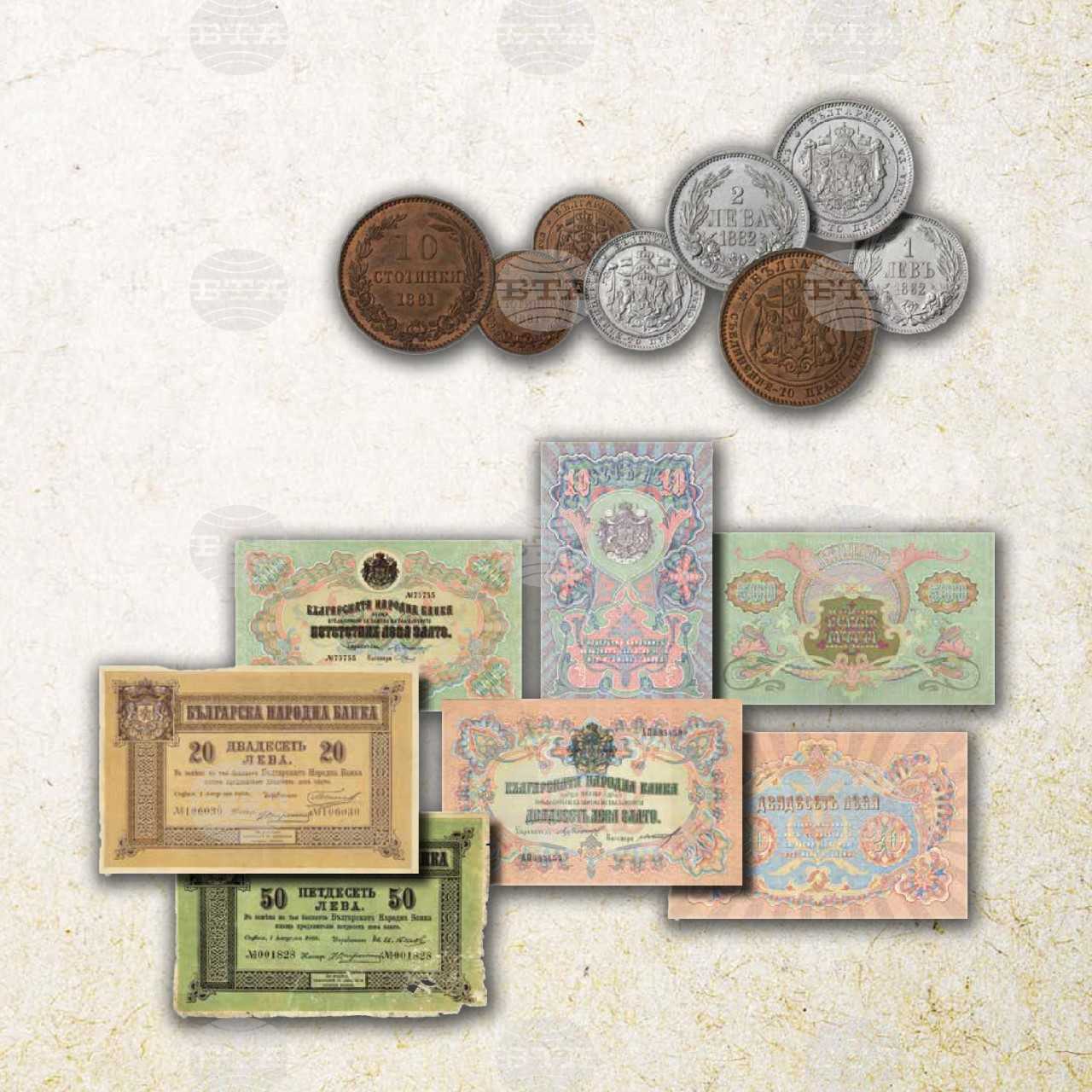
The Bulgarian lev passed peacefully in the first minute of Sunday, just months short of its 146th birthday. After circulating alongside the euro for cash payments in January, the lev ceased to be legal tender exactly one month after the euro officially became Bulgaria's currency on January 1, 2026.Rather than mourning its demise, this retrospective looks back at the lev's long and eventful history as it gives way to its successor, the euro.Created by LawThe lev was born on June 4 (New Style June 16), 1880, when Prince Alexander I promulgated the Minting Rights of the Principality Act. This came just two years after the restoration of Bulgarian statehood following the Russo-Turkish War of 1877-1878, which ended nearly five centuries of Ottoman rule over Bulgarian lands.The law established the lev as Bulgaria's monetary unit, divided into 100 stotinki. The name 'lev' (plural 'leva'), proposed by Prime Minister Petko Karavelov, sparked debate in Parliament. Supporters argued that the term - an old word for 'lion', the national symbol - reflected Bulgaria's identity. Opponents, including staunch pro-European and future prime minister Stefan Stambolov, favoured more universal names such as 'franc' and 'centime', in line with Western European practice. Ultimately, the national designation prevailed, following examples such as Romania's 'leu', which means the same. The name for the fractional coin, 'stotinka' ('a hundredth' in Bulgarian, plural 'stotinki'), was calqued from the French 'centime'.The lev was modelled closely on the French franc, then considered one of Europe's most stable currencies. Their structure, denominations, and gold content were identical, with the lev pegged to the franc at a one-to-one rate. Although Bulgaria never formally joined the Latin Monetary Union (LMU), the system - often seen as a precursor to today's eurozone - shaped the country's early monetary policy.Symbols and MeaningNational symbolism played a central role in the lev's design. The motto "Union Makes Strength" was added to the obverse, reflecting Bulgaria's irredentist aspirations and probably borrowing the phrase from Belgium. The motto appeared on most Bulgarian coins until World War II, with a minor variation in 1937.Proposed floral motifs on the reverse were also modified to represent the historic regions of Moesia, Thrace, and Macedonia, emphasizing national unity across territories left under Ottoman control. These design elements became a lasting feature of regular Bulgarian coinage until 1990.The 1880 law granted the State exclusive rights to mint coins, tasking the Bulgarian National Bank (BNB) with putting them into circulation. By the mid-1880s, the lev had fully replaced foreign currencies previously used in Bulgarian territory, firmly establishing itself as the country's sole legal tender.CoinsBulgaria's early coinage followed the rules of the LMU: gold, silver, and bronze coins under a bi-metallic (gold and silver) standard. In practice, bronze and silver coins were prioritized to address a shortage of small denominations that hindered daily trade, while gold coins were postponed to avoid inflation.The first modern Bulgarian coins - 2, 5, and 10 stotinki - were struck in bronze in 1881 by Ralph Heaton & Sons in Birmingham, England. Lev coins (1 and 2 leva) followed in 1882 from the St. Petersburg Mint, along with other silver-copper issues in subsequent years. As many as 456 types of coins (including varieties) were issued until 2025, ranging from 1 stotinka to 20,000 leva. They were made from a variety of metals and alloys: gold, silver, platinum, bronze, copper-nickel, copper, copper-nickel-zinc, zinc, aluminium-zinc-copper, copper-aluminium, aluminium, and even iron. Mintages varied widely, from 800 for two gold collector pieces to over 160 million for a 1 lev definitive.Until 1951, Bulgarian coins were produced abroad, at mints in England, Russia, France, Germany, Austria-Hungary, Hungary, Belgium, Czechoslovakia, and Yugoslavia. The Bulgarian Mint was established in 1952 and released its first coins at the end of that year, using Soviet technology. Since them, the mint in Sofia has pressed all regular issues and also all commemorative issues (since 1965). It is now ranked among the Top 12 in the world.Commemorative and Circulation IssuesBulgaria issued its first gold commemoratives in 1912, marking the declaration of its independence in 1908. Along with the 3-piece circulation set of 1894, this was the only gold coinage under the monarchy. In 2001, the BNB released official restrikes of the 1912 set, made in 1967-1968. Under the republic, 52 gold coins were produced between 1965 and 2025.Silver tribute coins were more numerous, with 143 issues over 60 years, and another 109 commemoratives were minted in copper or copper-nickel. Twenty-five of the silver commemorative coins were partially gold-plated.Regular-circulation coins were struck in gold, silver, bronze, copper-nickel, copper, copper-nickel-zinc, zinc, aluminium-zinc-copper, copper-aluminium, aluminium, and iron. They mostly featured the state emblem, the reigning monarch's effigy, or floral motifs.Commemorative coins honoured milestone events in Bulgarian history, and in particular the 1300th anniversary of the foundation of the Bulgarian State in 681 CE, with one gold, five silver and 17 copper-nickel issues dated 1981.Tribute was also paid to freedom fighters, political and spiritual leaders, enlighteners and educators, writers, poets, artists, composers, singers and actors, and governmental, educational, cultural and religious institutions. The centenary of the Bulgarian News Agency (BTA) occasioned a 1,000-lev coin in 1998. Special series were devoted to Bulgarian Orthodox monasteries and Medieval Bulgarian rulers.Sports competitions were covered extensively, above all winter and summer Olympics and FIFA World Cups. Noteworthy in this respect is the numbered series of ten gold coins, all denominated 5 leva, showing various Olympic sports and Olympics pioneer Pierre de Coubertin, that were released for the 2002 Games in Athens.Other themes included Bulgarian iconography, customs and traditions, natural landmarks, Thracian treasures, space exploration, and endangered species.First-Class ArtWhile most designers of Bulgaria's regular coins remain unknown, nearly 70 artists contributed to commemoratives, including leading sculptors, painters, and graphic designers such as Ivan Lazarov, Alexander Poplilov, Ivan Mandov, Valentin Starchev, Krum Damyanov, Lyubomir Prahov, Georgi Chapkanov, Stefan Nenov, and Petar Stoykov. Their work transformed coins into miniature canvases celebrating Bulgaria's history, culture, and heritage.The EU ConnectionThe European Union has featured prominently on Bulgarian coinage. A three-piece set marked the EU-Bulgaria Association Agreement in 1993: silver, gold, and platinum (the first and only Bulgarian coin made of this metal), featuring "ECU", i.e. European Currency Unit and, for the first time, the 12 gold stars from the European flag. Later issues (silver with gold-plated stars) celebrated Bulgaria's signing of its EU Accession Treaty in 2005 and entry into the Union in 2007, including a remarkable 1.95583-lev silver coin, precisely reflecting the exchange rate with the euro as fixed in July 1999. The stars have appeared on all stotinki coins since 1992, while Bulgaria's EU Council Presidency in 2018 inspired special 10- and 20-lev coins displaying the official logo and hashtag.Euro Coins with Lev DesignsThree designs that were part of the last lev and stotinki coins in circulation before the changeover have now 'migrated' to the national side of Bulgaria's euro coins, linking the old and new currencies. The Madara Horseman, an 8th-century rock relief and UNESCO World Heritage site, first appeared on an iron 5-lev coin in 1930 and is now on the 1 to 50 eurocent coins. The design, by Lyubomir Prahov, Petar Stoykov and Vladimir Yossifov, was originally used in lev and stotinki coins issued between 1992 and 2002.St John of Rila (876-946), Bulgaria's patron saint, debuted on a silver coin in 1996 and is now on the national side of the EUR 1 coin. This is Petar Stoykov's rendition of the saint's image that was originally stamped on a 1-lev regular coin of 2002. It replicated a depiction from a banknote of the same denomination that, when issued in 1999, met with strong opposition from the Holy Synod, which argued that placing a non-possessive and unmercenary ascetic on money was sacrilegious.Similarly, St Paisius of Hilandar (1722-1773), who is commonly credited as "the father of Bulgarian history", was first celebrated on a lev piece in 1972 and now adorns the EUR 2 coin. It replicates Vanya Dimitrova's design from a 2-lev regular issue of 2015.In both cases, artists relied on historical icons and imaginative reconstruction, as no authentic likenesses of the saints survive.One more feature of the local coinage highlights the lev-euro succession: the motto "God Protect Bulgaria", that the edge lettering of Bulgarian gold and silver (1882-1916) and, later, base-metal coins (1930-1940) used as a literal translation of the respective expressions that appeared in French, Belgian and Italian metal money in line with LMU practice. The "Bulgarian" EUR 2 coin now revives this practice, complete with the local idiosyncrasy - incuse rather than raised letters.The latest addition to the euro family echoes back to the inception of the lev and the debate it sparked: the word "stotinki" in Cyrillic on the obverse back-translates the "cents" on the reverse, taking us on a time trip to Parliament's debating chamber in 1880.OdditiesBulgaria's coinage included some unusual denominations, such as 21⁄2 and 3 stotinki, a 125-lev gold (for the 125th anniversary of the BNB), and the 1.95583-lev EU coin. Nine commemorative issues were hand-coloured, and five reproduced historical coins in miniature. Two collaborative projects under socialism, with the USSR and Hungary, resulted in paired coins (1 lev/1 rouble and 1 lev/100 forint) celebrating "eternal friendship" and shared heritage. Only two piedfort coins - double-weight and double-thick varieties of the standard-size counterparts - were struck in silver (in 1979 and 2004), and two 10-lev silver commemoratives (the 2018 EU Presidency coin and a 2003 issue for the 60th anniversary of the rescue of Bulgarian Jews from the Holocaust) were never released to the general public.RaritiesSome of Bulgaria's coins have become prized collector's items. The 1894 gold 100-leva coin, designed by Anton Scharff in Kremnitz (then Austria-Hungary, now Slovakia) is the most valuable, fetching up to EUR 84,000 at auction. Of the 2,500 minted, barely 1,000 survive. The 1916 silver 2-leva coin, almost entirely melted for war reparations, is also extremely rare, with only about 15 pieces known. One was auctioned off for USD 36,000. Other eagerly sought-after coins include patterns for the 1984 Summer Olympics (the actual coins were never released owing to a socialist camp boycott of the Games), an iron 10 leva of 1941 (BGN 50,000 in bidding), and a 2-stotinki coin of 1981 mistakenly inscribed "People's Republic of Bulgaria" instead of "One Thousand and Three Hundred Years of Bulgaria" (selling for some BGN 20,000). Recent 21st-century rarities include the 2002 Gold Bulgarian Lev (2,000 minted) and the 100-lev gold St George of 2007 (1,500 struck).BanknotesThe first Bulgarian banknotes appeared on September 1/13, 1885 under a law granting the BNB the exclusive privilege to issue paper currency. That 20 and 50 lev issue was printed at St Petersburg's Office for the Production of State Papers and featured elaborate designs and counterfeit proofing by Georgi Yakovlev Kirkov, who had earlier produced the official fair-copy manuscript of the first Bulgarian Constitution and also takes credit for designing this country's first postage stamps.Bulgaria is among the very few states in the world that have preserved their very first banknote. The unique light brown artefact, sized 150 by 97 mm, has a serial number 000001, is dated August 1, 1885, and is signed by central bank governor Ivan Ev. Geshov and cashier Yordan D. Tropchiev. It is now on display at the Regional History Museum in Gabrovo (Central Bulgaria). The banknote's original owner, merchant Vasil Tyulyumbakov, came across it in Romania in 1897, and his son sold it to the Museum in 1961 as it was - in a fine condition, unfolded, but with its upper right corner missing.The largest Bulgarian banknote series, known as "Orlov" after its Russian designer Ivan Orlov, was in circulation from 1904 to 1924 with 14 different types of notes. This paper money was the country's first with a vertical (portrait) orientation of the printed area.Backed by and freely exchangeable for gold and, later also for silver, the late 19th century banknotes were nevertheless unpopular because people preferred the security of precious metals. Paper money only became widely used by 1903-1907.Between 1885 and 2020, the BNB issued 135 types of banknotes in denominations ranging from 1 to 50,000 leva. Until 1998, most of them were produced abroad: St Petersburg, Moscow, London, Berlin, Leipzig, Munich, and New York City. The first Bulgarian-made note came off the presses of the State Printing House in Sofia in 1924. The Printing Works of BNB Corp., established in August 1994 and operational since 1996, manufactured all Bulgarian banknotes in 1999-2013. The last pre-euro series of 2018-2020 came from Oberthur Fiduciaire AD, Sofia, a joint venture of François-Charles Oberthur International SA and the BNB Printing Works. In 2005, these Printing Works produced Bulgaria's first commemorative banknote, 20 leva celebrating 120 years of paper currency. It introduced the innovative VARIFEYE® security feature, for which it was distinguished as one of the most original banknotes worldwide.Artistry and RecognitionBulgarian banknotes, like coins, showcase top national visual artists, including Dimitar Gyudzhenov, Nikola Kozhuharov, Hristo Lozev, Alexander Bozhinov, Boris Denev, Konstantin Shtarkelov, Vasil Zahariev, Antonii Ivanov, and Kiril Gogov. Their designs feature landscapes, historical landmarks, and scenes from farming and industry: shepherds tending their sheep, reapers reaping, ploughmen ploughing, pickers picking tobacco, roses and grapes, builders building, and miners mining. Portraits of royalty and prominent Bulgarians are there, too. A few notes depict ordinary people, such as folk-costume-clad Evdokia Kovacheva on a 500-lev note of 1941 and young grape-pickers Sofka Kocheva on 100 leva of 1951 and, the best known of them all, Kina Garbova on 2 leva dated 1962.Bulgarian banknotes have received global acclaim: in 2008, the Bern-based International Finance Bank (IFB) ranked the lev the third most beautiful currency worldwide among more than 50 competing, only behind the Ukrainian hryvnia and the Australian dollar and ahead of the US dollar. In 2019, the 100-lev note of 2018 won the Regional Banknote of the Year award at the High Security Printing EMEA (Europe, Middle-East and Africa) forum in Malta for its "brilliant, beautiful and dynamic security features".Four Currency Reforms in 70 yearsAfter the outbreak of the First Balkan War, the BNB stopped paying out gold for its banknotes in October 1912. Under an express law of January 1919, the central bank discontinued the exchange of paper money for gold and silver "until further notice." That notice never materialized, and the banknote issue became fiduciary.In 1919, the Bulgarian lev had lost nearly 97% of its value in gold from 1912. Still, unlike other WW I losers like Germany, Austria and Hungary, this country did not experience post-war hyperinflation.Bulgaria's first currency reform came in November 1928, backed by a Stabilization Loan from the League of Nations, to curb the inflation caused by the two Balkan Wars and World War I. The gold content of the lev was fixed at 0.010870 g, with a par exchange of 138.888 leva per US dollar. This rate held until the dollar's devaluation in 1933, which reduced it to 83 leva/dollar.After World War II, the lev was reformed again in March 1947. Old banknotes above 100 leva were demonetized and replaced on a 1:1 basis by new 1945-dated notes, but cash holdings above 15,000 leva were heavily taxed. Money in circulation fell to a third, while the lev depreciated and staple goods were rationed. The gold content of the lev, the standard of prices and the exchange rate (284.72 leva/dollar) remained unchanged.In May 1952, yet another redenomination replaced 100 old leva with 4 new ones, though individuals were given far less lucrative exchange rates depending on their holdings, resulting in the expropriation of 857 million new leva from households and private enterprises. In line with the Soviet rouble, the gold content of the lev was fixed at 0.130687 g. The official exchange rate was 1.70 leva/rouble and 6.80 leva/dollar. Food rationing was lifted.The last communist-era currency reform came in January 1962, with a 10-to-1 conversion of old to new leva. Prices, wages, pensions, and savings were adjusted proportionally. The gold content and exchange rates were revised to 0.759548 g, 1.30 leva per rouble, and 1.17 leva per US dollar.After an economic crisis and 234% hyperinflation in 1996, with prices skyrocketing 21-fold and the lev weakening against hard currencies by a factor of 20 in March 1997, year on year, the BNB rushed to issue high-denomination paper money, including the largest 50,000-lev note in May 1997. To restore stability, a currency board arrangement anchored the lev to the Deutsche Mark at 1,000 to 1 in July 1997. A redenomination in July 1999 removed three zeros from the currency, establishing the peg at BGN 1 per DEM 1. At the beginning of 1999, as the euro replaced the German currency, the fixed exchange rate became BGN 1.95583 per EUR 1.In Lieu of EulogyThe lev's retirement may sadden some Bulgarians. In a last-ditch attempt to save it or at least postpone its end, anti-euro parties, pressure groups and politicians have been staging protests, tabling draft legislation, campaigning for referendums, and taking their case to the EU Court of Justice and the European Parliament.Withdrawn from circulation as it is, the currency will nevertheless survive in idioms and phrases, nostalgia, and mumbled price comparisons. Some coins and notes will be coveted collectibles or will end up as museum exhibits, while others might be kept as family keepsakes, forgotten between book pages, or stashed away into drawers.Even after its withdrawal, the legacy of the lev will endure. In October 2026, collectors will line up yet again at the BNB - this time for the St John of Rila Gold Bulgarian Euro, carrying the lev's memory into a new era.
Read Full ArticleThis article was originally published on bta_bg. Click the button above to read the complete article.