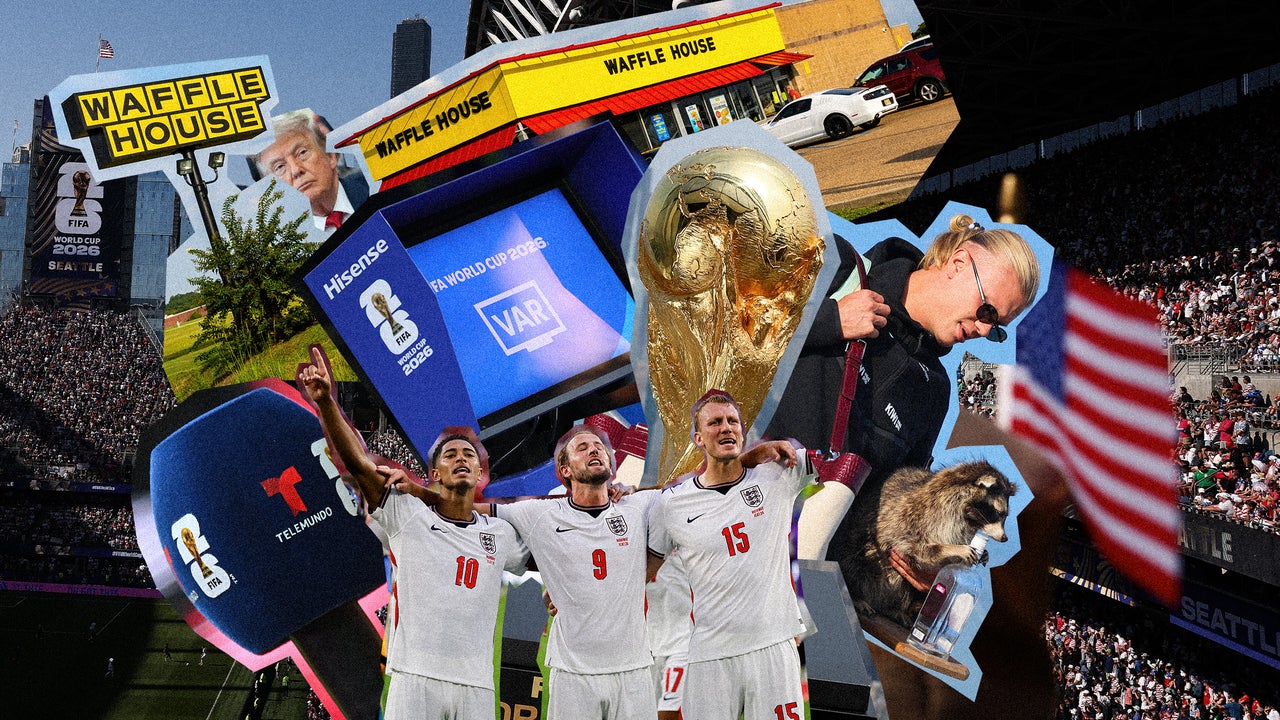
Congratulations in advance to Argentina or Spain, but let’s be honest: Even before the opening whistle of the final, the 2026 World Cup has already produced undeniable winners and losers. And not just on the pitch, but in culture and business from the White House to Waffle House. Here, then, are our judgments on who and what emerged for better or worse from one of the world’s most significant socioeconomic events. (And no, our calls are not subject to video review!) [Photo: Jan Langhaug/NTB/AFP/Getty Images] WINNER: Norway Regardless of who wins what this weekend, no team scored more points with the public at large than Norway. Erling Haaland, their star player, was an imposing Viking on the field, leading his team to its first-ever quarterfinal appearance. And he was an appealing weirdo everywhere else, enthusing over America, buying a taxidermy raccoon souvenir, and racking up millions of followers and views from YouTube to Weibo . Norway fans (including its entire parliament ) charmed the internet with the synchronized “Viking Row” cheer—and that one guy who wouldn’t do it. They even had a cool jersey font ! [Photo: Chad Robertson/Adobe Stock] WINNER: Waffle House World Cup visitors (and internet influencers) from around the world heaped surprising praise on “Americana” brands like Waffle House, Bass Pro Shops, and Buc-ee’s—a welcome development for the global reputation of the U.S. When the media amplified these tourists evidently gobsmacked by the abundance of gas pumps and free soda refills, it encouraged more of the same, adding up to a de facto brand boost for these symbols of mainstream America. [Photo: Aaron Schwartz/CNP/Bloomberg/Getty Images] LOSER: The White House The official U.S. attitude toward the World Cup—that is, the attitude projected from the government, not the grass roots—was less welcoming and less impressive. The Iranian team was not allowed to bunk down in the U.S., and a Somali referee was barred from entering the country. Then the president, despite acknowledging that he’d previously never heard of a red card, intervened with FIFA to object to the carding of an American star. And indeed, the penalty was promptly reversed. It may well have been reversed without the involvement of a head of state, but as it played out the episode came across as unseemly and ignorant bullying. Its most tangible effect was inspiring the next U.S. opponent, Belgium, to deliver a 4-1 thrashing. [Photo: Heuler Andrey/Eurasia Sport Images/Getty Images] WINNER: Oasis The English side missed out on the final, but its impressive run picked up an unofficial theme song in the form of the 1990s Oasis hit, “Wonderwall.” The team started using it as a postvictory anthem early in the tournament, with players singing along; English fans loved it. Other vintage songs got unexpected boosts from unplanned anthem status—notably “Take Me Home, Country Roads” for the U.S. team—but England’s deep drive extended the “Wonderwall” momentum. Fans described it right in tune with the hopeful nostalgia of a fan base searching for its first Cup triumph since 1966. This week the song reached No. 3 on Spotify’s global chart (up from 150th place a month ago). That puts it in striking distance of the chart-topper: Shakira and Burna Boy‘s official Cup theme, “Dai Dai.” [Photo: Richard Sellers/Sportsphoto/Allstar/Getty Images] LOSER: Video Assistant Referee tech Video Assistant Referee procedures are supposed to use on-site instant replay tech to settle controversial calls. Instead, VAR seems to be just creating more controversy. Goals were taken back, penalties reversed, flops called; related technology that includes an in-ball sensor led to hair-splitting offside calls belatedly imposed. Egypt, Switzerland, and Croatia were among the teams blaming losses on VAR calls. And more prosaically, many fans complained the process of reviewing video was a momentum killer. In perhaps the most absurd incident , a high kick bounced off a stadium sky cam before landing in front of an English player. This arguably should have stopped play, but VAR missed it. [Photo: Patrick T. Fallon/AFP/Getty Images] WINNER: Telemundo While we don’t have the final ratings scorecard yet, this World Cup has already put up some striking audience numbers. According to Variety , the England versus Mexico elimination match, with 45 million viewers in the U.S., was “the most-watched World Cup telecast in U.S. history for a match that did not include Team USA.” But what’s really interesting is that over half that audience watched via (Spanish-language) Telemundo. While part of that can be chalked up to Mexico fans in the U.S., there’s other evidence that Telemundo is having a winning Cup. As Defector pointed out, viewer data for the U.S.-Belgium match showed that “more than 25% of the viewers for a game with no direct connection to Latin America still watched in Spanish,” on Telemundo. Partly this reflects demographics, partly a distaste among soccer fans for the English-language Fox announcers. But it’s undeniable that Telemundo competes for a beyond-niche audience and has the broadcast charisma to reach that gooooooooooooool . [Photo: Aaron Schwartz/Getty Images] LOSER: FIFA’s Reputation The 2022 World Cup in Qatar left FIFA’s reputation in tatters, marred by bidding-process scandals and alleged human rights abuses. This iteration wasn’t that bad, but FIFA didn’t do itself any favors by kicking things off by awarding the wholly invented FIFA Peace Prize to Donald Trump. Trump took a break from his subsequent war on Iran to ensnare FIFA in his plea for that red card reversal. In addition to that and various VAR outrages, FIFA was accused of a variety of conspiracy theories to prize commerce over sport, including a murky ticketing system that was too pricey for many and occasionally resulted in empty seats at big games . Fair or unfair or occasionally absurd, the drumbeat of attacks shows FIFA has a way to go to earn widespread trust. [Photo: Jessica Rinaldi/The Boston Globe/Getty Images] WINNER: Scottish Fans Nobody believed Scotland’s team was likely to have much impact on the actual tournament outcome. But its “Tartan Army” supporters, particularly in Boston, proved themselves celebratory beer-drinking champions anyway. That included silliness like plopping traffic cones on monuments , but they offered the rest of us a useful reminder that this whole thing is meant to be, above all, a fun game to play, watch, and cheer on. [Photo: Alex Pantling/FIFA/Getty Images] WINNER (AFTER EXTRA TIME): Soccer’s Popularity in the U.S. After the U.S. team’s curt dismissal from the tournament, newbie fans could be forgiven disappointment. But let some time pass. All nitpicks aside, this World Cup was packed with legit drama that (mostly) provided a break from a troubled world. We’ll see what the final numbers reveal, but all signs point to new highs of engagement. That continues a trend going back decades, and supplemented by the steadily rising popularity of the women’s game. Soccer is still the future, and that’s a good thing for the sport and its U.S. fans.
Read Full ArticleThis article was originally published on fastcompany. Click the button above to read the complete article.